

In commercial and industrial development, fire protection water storage is often viewed as a relatively straightforward component of a much larger construction project. Once the required storage capacity has been established, the assumption is that an appropriately sized tank can be specified, procured and installed when needed.
In practice, the process can be considerably more complex.
Fire protection water storage involves a combination of hydraulic requirements, structural engineering, site conditions, regulatory compliance and construction coordination. When these considerations are addressed too late in the development process, the consequences can extend well beyond the cost of the tank itself.
Foundation modifications, engineering revisions, restricted site access and installation delays can all introduce unexpected costs into a project.
For developers, general contractors and fire protection engineers, early planning is therefore one of the most effective ways to manage project risk and achieve a cost-efficient fire protection water storage solution.
One of the first considerations when specifying a fire protection water tank is determining the volume required to support the facility’s fire suppression system.
However, selecting a tank based solely on nominal storage capacity can overlook several important engineering requirements.
The usable water volume available to a sprinkler system may differ from the tank’s total storage capacity, depending on the positioning and configuration of inlets, outlets and other design considerations.
These factors need to be evaluated alongside the applicable requirements of NFPA 22, the Standard for Water Tanks for Private Fire Protection, and the hydraulic design of the associated fire protection system.
Failing to establish these requirements early can result in a tank configuration that requires subsequent modification or replacement during the approval process.
At SBS Tanks USA, fire protection water storage solutions are developed around the project’s required capacity, site conditions and applicable engineering criteria, helping ensure that the selected tank is appropriate for its intended application.
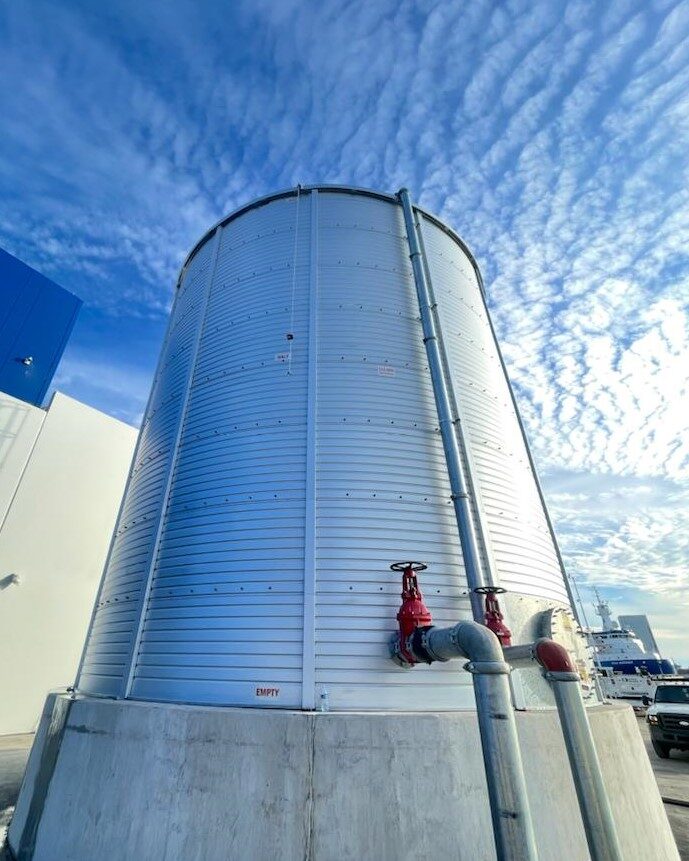
Available space is another factor that can significantly influence the overall cost of a fire protection water storage installation.
Commercial developments frequently have competing demands for land, including buildings, parking, access roads, loading areas, utilities and other essential infrastructure.
When tank requirements are considered late in the design process, the remaining available footprint may be insufficient for a conventional storage configuration.
This can lead to changes in site layouts, additional civil works or more complicated installation arrangements.
A vertically optimized tank configuration can provide an effective alternative.
The SBS Tanks Standard (ST) Range offers multiple diameter and height configurations, allowing engineers to achieve the required storage capacity while making efficient use of the available footprint.
Rather than increasing the tank diameter, additional wall height can be used to accommodate the required water volume within a smaller ground area, subject to the applicable structural and site requirements.
For developers and contractors, considering these options during the initial planning stages can help avoid costly redesigns and make more efficient use of valuable development space.
A fire protection water tank must also be designed to withstand the environmental conditions associated with its location.
Across the United States, wind loading, seismic activity, snow loading and other regional factors can influence the structural design of water storage infrastructure.
A tank installed in a hurricane-exposed coastal region may require a different structural configuration from one installed in an area with significant seismic considerations.
These requirements can affect the tank shell, roof structure, anchoring arrangements and foundation design.
SBS Tanks offers both Standard (ST) and Cyclonic (CY) Range solutions, with project-specific engineering undertaken to address applicable environmental loading conditions.
Where required, designs are independently reviewed and sealed by professional engineers licensed in the relevant state.
Addressing these considerations during the initial specification process helps reduce the likelihood of engineering revisions, approval delays and unforeseen structural modifications later in the project.
The tank foundation represents another important component of the overall project cost.
Foundation requirements are influenced by the tank’s diameter, height, stored water volume, ground conditions and structural loading.
If the foundation is designed or constructed before the final tank configuration has been confirmed, changes to the tank specification may require additional engineering or remedial construction work.
SBS Tanks provides tank-specific foundation requirements to assist the civil and structural engineers responsible for the foundation design.
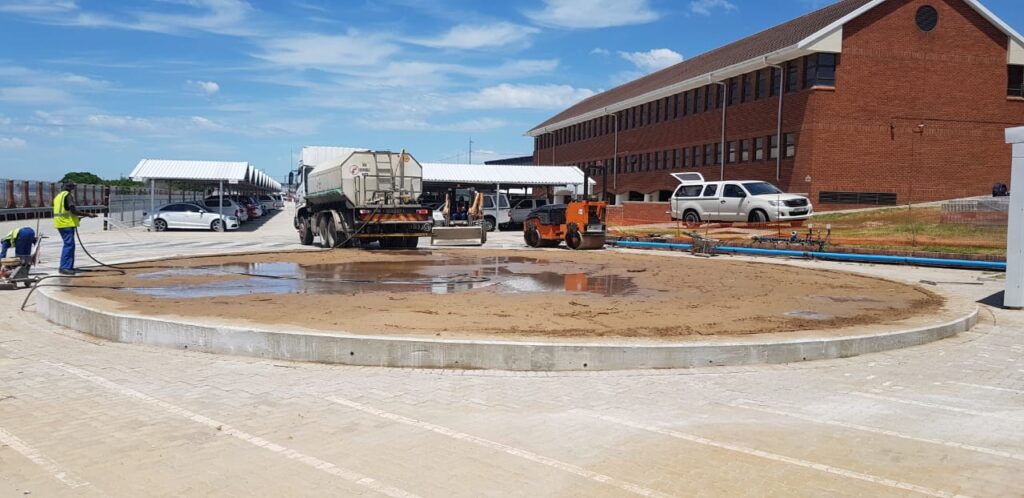
For suitable installations, a reinforced concrete ring beam foundation can offer advantages over a conventional full concrete pad.
By providing structural support around the tank perimeter, a ring beam may reduce concrete quantities and associated civil works, depending on the ground conditions and engineering requirements.
Coordinating foundation design with tank selection allows contractors to plan civil works accurately and helps ensure that the installation site is ready when the tank components arrive.
Construction schedules are often among the most closely managed aspects of commercial and industrial development.
Delays involving critical fire protection infrastructure can affect inspections, commissioning and ultimately the readiness of a facility for occupation or operation.
Traditional welded or concrete tank construction methods may involve extensive on-site fabrication, specialist lifting equipment and longer construction periods.
SBS Tanks’ modular construction methodology provides an alternative approach.
Tank components are manufactured before delivery and assembled on site using a specialized jacking system, reducing the need for cranes and extensive scaffolding during installation.
Depending on tank size and project conditions, this approach can significantly reduce installation time and simplify coordination with other contractors.
The benefits extend beyond installation efficiency. Reduced equipment requirements, controlled assembly procedures and shorter construction periods can contribute to improved site safety and more predictable project scheduling.
For general contractors, these considerations can be particularly valuable when fire protection infrastructure forms part of a tightly coordinated construction program.
The initial purchase price of a fire protection water tank is only one component of its long-term cost.
Maintenance requirements, corrosion resistance, durability and the potential for future repairs should also form part of the evaluation.
A lower initial capital cost does not necessarily represent the most economical solution over the operational life of the facility.
SBS Tanks’ modular steel tanks incorporate corrosion-resistant Galvalume® steel panels and an internal liquid storage liner that separates the stored water from the tank shell.
This design reduces direct water contact with the steel structure and supports long-term durability with relatively low maintenance requirements.
When comparing alternative storage technologies, developers and facility owners should therefore consider both the initial installed cost and the anticipated maintenance and operational requirements over time.
The most effective way to avoid unnecessary expenditure is to integrate fire protection water storage into the project planning process from the outset.
Early collaboration between developers, fire protection engineers, civil contractors, tank suppliers and the relevant authorities helps establish a coordinated approach to capacity, compliance, site layout, foundations and installation.
It also creates opportunities for value engineering before design decisions become difficult or expensive to change.
For SBS Tanks, this means working with project stakeholders to identify the most appropriate storage configuration and engineering requirements before manufacturing and installation commence.
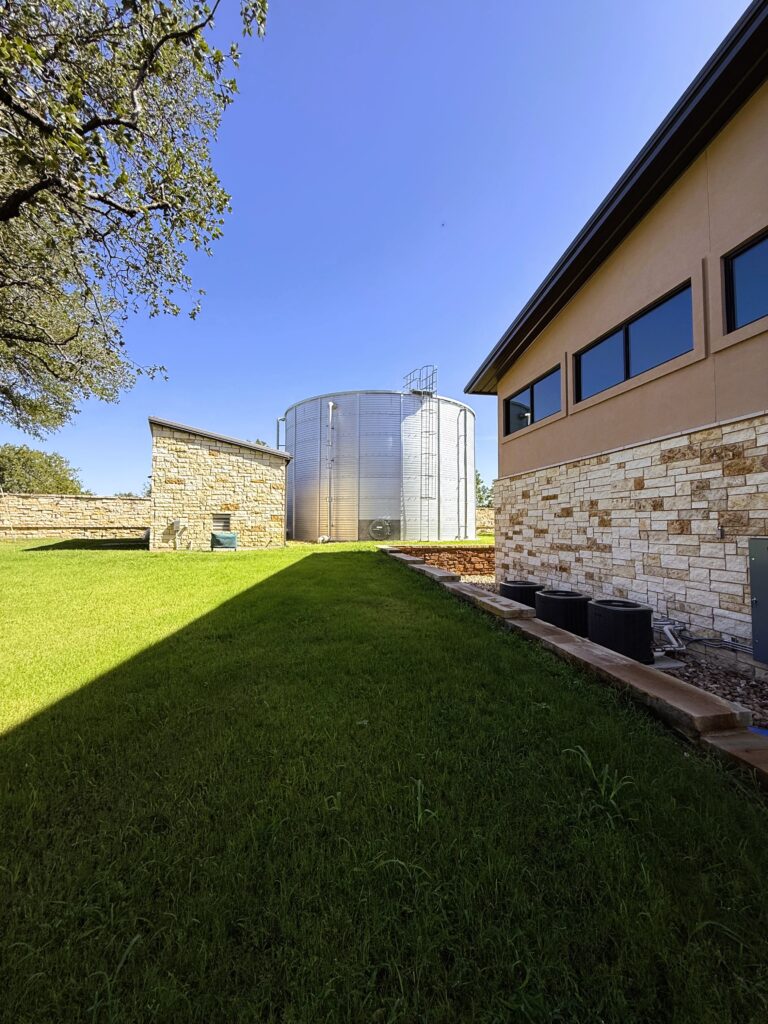
Fire protection water storage should never be treated as an afterthought in commercial or industrial development.
While the primary objective remains providing a dependable water supply for fire suppression, the decisions made during specification and planning can have a substantial influence on project costs, construction schedules and long-term performance.
From determining usable capacity and accommodating site constraints to addressing environmental loading, foundation requirements and installation methodology, each element contributes to the success of the completed system.
The true cost of getting fire protection water storage wrong is not necessarily the price of the tank. It is the additional time, engineering, construction and disruption that could have been avoided through better planning.
By involving experienced water storage specialists early in the development process, project teams can make informed decisions, reduce unnecessary risk and deliver fire protection infrastructure that is engineered for the facility it is intended to protect.
SBS Tanks USA designs, supplies and installs modular steel water storage solutions for fire protection, commercial, industrial, agricultural, rainwater harvesting and utility applications across the United States and international markets.
With more than 25 years of international experience, SBS Tanks offers a comprehensive range of engineered water storage solutions designed to accommodate varying capacities, site conditions and environmental requirements.
Its Standard (ST) and Cyclonic (CY) ranges combine corrosion-resistant Galvalume® steel panels, purpose-designed internal liner systems and efficient modular installation methodologies to provide durable, reliable water storage.
Supported by ISO 9001-certified manufacturing, project-specific engineering and experienced installation teams, SBS Tanks works closely with engineers, contractors and developers to deliver water storage solutions tailored to individual project requirements.
For more information about SBS Tanks USA and its fire protection water storage solutions, visit www.sbstanksusa.com.
© SBS Holdings 2026
